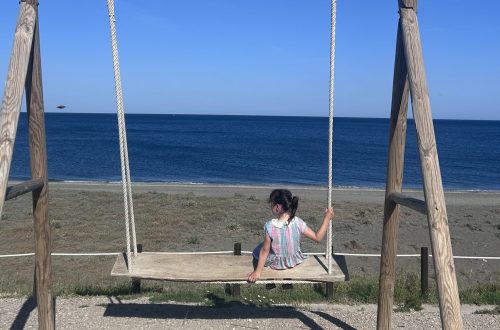
Moving to Spain: expectation vs reality
Moving to Spain. The dream for so many. Sunshine, slower living, and a sense of freedom that feels increasingly rare. Many of these things can be true, but moving your family abroad is not for the faint hearted.
It takes resilience, patience, and a mindset rooted in growth. Sometimes, though, the positive vibes that get you here can tip quietly into naivety, and real life does not always meet your expectations.
I do not regret our move. Not for a second. But I do think we need to talk more honestly about what it really takes, especially as mothers carrying the emotional weight for our families. If I had managed my expectations better, I think I might have felt less pressure when things were not picture perfect. Everyone’s experience is different but, for me, the biggest lessons have been around language, friendships, and the idea of becoming a local.
“They’ll just pick up the language”
Before we moved, I heard it everywhere. Children are like sponges. Immersion is the best way. They will be fluent in no time. Even the mums I spoke to who were already living in Spain reassured me of this, all except one. She gave me a far more grounding view. It is hard work, it can take years, and at times, it is heartbreaking. She was right.
After thorough research, I enrolled my daughter into a local Spanish school with very few English speaking children. The first few weeks were a novelty that she embraced and enjoyed, and I expected her to continue thriving, but she did not. She struggled. Quietly at first, then more visibly. I underestimated how exhausting it is to spend every day translating the world in your head while trying to learn, make friends, and keep up academically.
As a working solo mum, I did not have the time I would have liked to properly support her language journey. I assumed a Spanish tutor would bridge the gap. But that, too, came with a learning curve. I expected vocabulary growth and confidence. What I did not realise was that many tutors focus on school support, helping children cope with lessons they do not yet fully understand. When she kept saying she needed more vocabulary, I felt confused and frustrated, not realising my expectations did not match what she was receiving.
For a while, I pushed more Spanish at home. With a full week of school, clubs, social time, staying connected with family back home, and much needed downtime, it only added pressure on us both. There were moments I felt I had failed her. Guilt, doubt, questioning whether my optimism had blinded me to what she truly needed.
Over time, I realised she needed less pressure, not more. She needed help managing her expectations and permission to switch off from Spanish at times. We talked about how language is learned. I explained that speaking Spanish fluently is the final piece, but all the Spanish babbling I could hear while she played was her learning the rhythm and sound of the language. She was already making progress and the rest would come.
She often asked, when will I be Spanish? What she meant was when will I understand like everyone else. We talked about how long it took her to learn all the words she knows in English. That helped her see this takes time and she did not need to know everything yet. I also started enrolling her in English speaking clubs. Until then, I had been adamant that extracurricular activities should be in Spanish for full immersion, but I realised she needed space in her week where everything felt easy. And, instead of insisting we do structured Spanish lessons at home, I left play based books and activities around so she could choose them when she felt ready.
The difference was noticeable. She seemed more settled in school and her Spanish improved more naturally. Less pressure actually gave her more space for learning.
Easy playmates, harder friendships, and the reality of immersion
Making playmates in Spain is easy. Parks are social, kids are on beaches and in restaurants, and the international community arranges meet ups and play dates. Very soon after we arrived, my daughter was always busy, always around other children. She had a full birthday guest list, we were always bumping into friends around town, and on the surface, she seemed very settled.
But, one day, she said something that stopped me in my tracks. “I want my easy friends again”. She was not lonely. She was grieving the ease. The shared language, the effortlessness, and the deeper connection. Not having to work so hard at building friendships. At the same time, I was adjusting a reality that I hadn’t expected. Back in the UK, we were very much part of a small community and I thought we would replicate that here. I had imagined village connections, school gate chats, naturally blending into the local community. We chose a local Spanish school in a small pueblo, hoping it would be the gateway into community life. What I did not fully appreciate was how deep rooted those communities are. Generations of families move through the same schools, friendships are long established, and social circles are often set from childhood.
In highly international areas, Spanish life often exists alongside a large expat community, not necessarily intertwined with it. Language is part of the barrier, but so are cultural rhythms, family histories, and social norms that take years to understand. Yes, I know people who have built strong friendships but it takes time. Understanding that earlier might have softened some of the disappointment I felt when immersion did not happen as organically as I had imagined.
Over time, we have both adjusted. My daughter’s friendships are flourishing and the longing for easy friendships has grown quieter. I do not know if that is adaptation or forgetting what that felt like, but, when I speak to young adults who grew up abroad, many say they do not remember these feelings. They are grateful and feel that moving abroad was a gift. That gives me comfort, even if a bit of mum guilt still lingers.
A more realistic mindset
I still believe a positive mindset is essential when moving abroad. Without it, the challenges can feel overwhelming. But positivity works best when it is paired with realism, when we allow space for struggle, acceptance that the perfect move doesn’t exist, and adjusting alongside the way.
Moving to Spain has given my child resilience, perspective, and experiences she may never consciously remember, but which will shape who she becomes. It has stretched us emotionally but it has also made me stop in my tracks sometimes and check whether I am setting unrealistic expectations for my daughter.
Perhaps the healthiest mindset is not blind optimism or constant doubt, but something in between. Hope, with honesty. And the understanding that building a life, friendships, language, and belonging takes longer than we think.
Follow us on Instagram and Facebook for more real stories and inspiration about building a family life in Spain.


You May Also Like
The fear of going ‘back home’
Where to live in Spain?